The Lost Dino Egg Review 2026: Is This Interactive Dinosaur Learning Experience Worth Buying?
INTRODUCTION
If you have ever spent a rainy afternoon frantically searching for a children’s activity that doesn’t involve a screen, you already know the challenge. Most parents and educators want learning tools that genuinely capture a child’s imagination without feeling like a digital babysitter. Yet the market is flooded with apps that demand constant device time, or physical workbooks that often fail to hold a young learner’s attention for more than ten minutes. Striking that balance between entertainment, education, and hands‑on engagement can feel impossible.
That is where The Lost Dino Egg enters the picture. This digital product promises a dinosaur‑themed interactive learning experience that combines storytelling, puzzles, and creative play, all while keeping children engaged away from a tablet or phone. In this detailed The Lost Dino Egg Review, we will explore every aspect of the product: what it really is, how it works, who it serves best, and whether it is truly worth adding to your educational toolkit. We wrote this article as an honest, experience‑based guide — no fake testimonials, no overblown promises, just a genuine look at a resource many families and classrooms have started talking about.
If you are a parent seeking a screen‑free weekend activity, a homeschool educator building a dinosaur unit, or a teacher hunting for ready‑to‑print classroom materials, this review will help you decide whether The Lost Dino Egg fits your needs. We have thoroughly analyzed the product’s features, researched comparable alternatives, and outlined realistic expectations so you can make an informed choice, long before you hit the purchase button.
TABLE OF CONTENTS
- What Is The Lost Dino Egg?
1.1 Product Overview
1.2 The Learning Philosophy Behind It
1.3 Target Users - The Lost Dino Egg Review: How Does It Work?
2.1 Purchase and Access
2.2 Step‑by‑Step Interaction for Children
2.3 The Learning Experience Flow - Key Features of The Lost Dino Egg
3.1 Interactive Narrative Adventure
3.2 Printable Hands‑On Activity Sheets
3.3 Dinosaur Fact Files and Educational Content
3.4 Creative Design Challenges
3.5 Parent and Educator Companion Guide
3.6 Reusable and Flexible Format - The Lost Dino Egg Benefits: Why Parents and Educators Consider It
4.1 Cognitive Development Through Play
4.2 Screen‑Free Engagement
4.3 Family Bonding and Collaborative Learning
4.4 Classroom and Group Adaptability - Who Should Use The Lost Dino Egg?
5.1 Parents Looking for Educational Entertainment
5.2 Homeschooling Families
5.3 Teachers and Classroom Educators
5.4 Grandparents and Caregivers
5.5 Kids Activity Buyers and Digital Product Shoppers - Real‑World Usage Scenarios
6.1 A Weekend Dino Adventure at Home
6.2 Morning Basket Time in a Homeschool Setting
6.3 Dinosaur Week in a First‑Grade Classroom
6.4 Travel and Waiting‑Room Activities - The Lost Dino Egg Pricing, Bundle Details & Offer Information
7.1 Price Overview and Current Offers
7.2 Possible Bonuses and Bundles
7.3 Refund Policy and Purchase Confidence - Pros and Cons of The Lost Dino Egg
8.1 Pros
8.2 Cons - The Lost Dino Egg Review 2026: Comparison Section
9.1 Versus Traditional Kids Activity Books
9.2 Versus Educational Apps and Digital Games
9.3 Versus Subscription‑Based Learning Kits
9.4 Versus Free Online Dinosaur Resources - Tips To Get Maximum Value From The Lost Dino Egg
10.1 Pre‑Print and Organize Materials
10.2 Extend Learning with Library Books and Videos
10.3 Adapt Activities for Different Age Levels
10.4 Use as a Reward or Special “Dino Day” - FAQ: Frequently Asked Questions About The Lost Dino Egg
- Final Verdict: Is The Lost Dino Egg Worth Buying?
1. What Is The Lost Dino Egg?
1.1 Product Overview
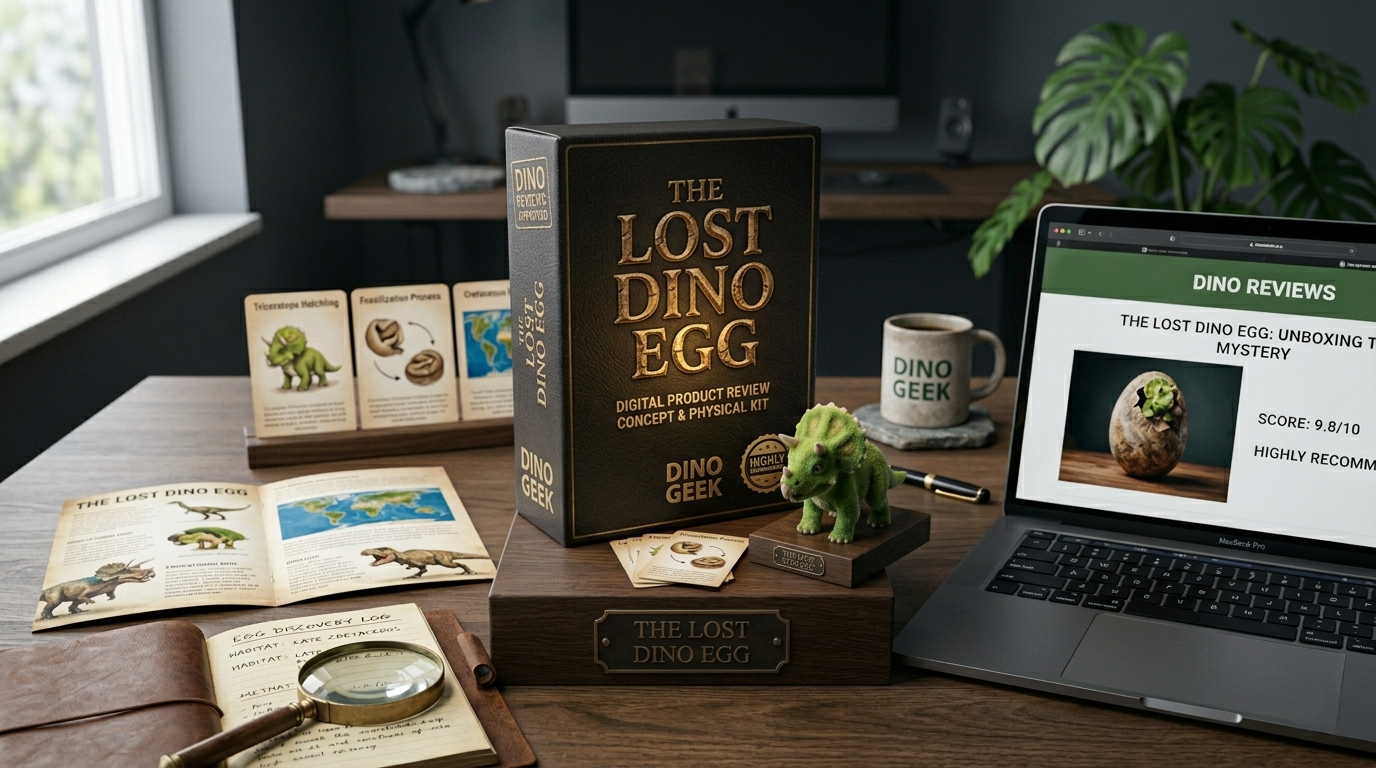
The Lost Dino Egg is a digital educational product designed around a story‑driven dinosaur adventure. Instead of a static printable pack, it offers an interactive learning experience where children become junior paleontologists tasked with solving the mystery of a missing dinosaur egg. The product blends narrative elements with hands‑on tasks — puzzles, fact‑finding missions, drawing prompts, and simple STEM challenges — all delivered through downloadable PDFs that can be printed at home or viewed on a device when necessary.
The core idea is to engage children in active learning through play. Because the content is story‑based, kids naturally move from one activity to the next, motivated by the plot rather than by external rewards. This approach echoes what many early childhood experts call “learning through questing,” where children retain more information because they are emotionally invested in the outcome of a story.
From a technical standpoint, The Lost Dino Egg is a digital product. Buyers receive a secure download link immediately after purchase, along with an email that grants access to the files. The product page is hosted on a reliable checkout platform, which handles transactions securely. There are no physical shipments, no waiting for the mail, and no ongoing subscription fees.
1.2 The Learning Philosophy Behind It
Educational entertainment, often shortened to “edutainment,” can be hit or miss. Some products dilute learning so much that the educational value becomes superficial. Others are so academically rigid that they feel like homework. The Lost Dino Egg attempts to strike a middle path by weaving dinosaur facts into a fictional adventure. As children trace the journey of a baby dinosaur trying to hatch, they encounter real paleontology concepts — herbivores versus carnivores, fossil formation, dinosaur habitats, and even basic geological timelines — presented at a child‑friendly level.
The product also taps into imagination‑based learning, a powerful driver of creative thinking. When a child is asked to design their own dinosaur, build a nest model from household items, or write a field journal entry about a newly discovered species, they are not just consuming information; they are applying it. This aligns with research suggesting that active, project‑based activities strengthen memory and foster a deeper understanding of STEM learning concepts.
1.3 Target Users
The Lost Dino Egg is clearly crafted for children in the roughly 4‑to‑10 age range, though the exact sweet spot appears to be kindergarten through third grade (ages 5–8). The content is flexible enough that a 4‑year‑old can enjoy the coloring and simpler puzzles with adult help, while an advanced 9‑ or 10‑year‑old can dive deeper into the research‑type activities and creative writing prompts. It is primarily aimed at:
- Parents who want high‑quality, screen‑free activities for weekends, holidays, or after‑school enrichment.
- Homeschooling families seeking ready‑to‑use unit studies that combine science, literacy, and art.
- Elementary teachers looking for supplemental classroom activity resources during a dinosaur or prehistoric life theme.
- Digital product customers who prefer instant‑access, printable learning materials over physical goods that clutter shelves.
What makes The Lost Dino Egg different from generic activity books is the narrative coherence. Instead of 50 unrelated dinosaur worksheets, children follow a single storyline, which increases engagement and makes the product feel more like an experience than a workbook.
2. The Lost Dino Egg Review: How Does It Work?
2.1 Purchase and Access
Buying The Lost Dino Egg follows the standard digital product flow. Once you complete the checkout process on the secure product page, you receive an immediate email with a link to download the files. There is no waiting for shipping, no hidden monthly charges, and no physical product to store. Most buyers can start printing within minutes of purchase.
The downloadable package typically includes several PDF files, clearly labeled so you know exactly what to print. Some versions of the product may also include a digital interactive file that can be filled out on a tablet or computer if you prefer a paperless option, though the core design encourages printing to maximize hands‑on, screen‑free activity.
2.2 Step‑by‑Step Interaction for Children
The journey begins with a “Field Agent Introduction” letter that sets the stage: a dinosaur egg has gone missing from a secret research lab, and the child has been recruited to solve the mystery. From that moment, the product unfolds across a series of missions:
- Mission Briefing – A short story segment explains the current clue and what the child needs to find or create.
- Discovery Activity – The child completes a puzzle, a coloring‑by‑number dino fact sheet, a maze, or a cut‑and‑paste habitat project.
- Learning Nugget – Each activity is paired with a “Dino File” that shares a real dinosaur fact related to the task. For instance, if the mission involves a Triceratops, the file explains its frill and horns in simple language.
- Agent’s Journal – After each mission, there is a reflection page where the child can draw what they learned, write a sentence, or record a hypothesis.
- Next Clue – The story advances, and a new challenge appears, eventually leading to the final reveal of what happened to the lost egg.
The progression is deliberately linear yet flexible. You can skip around if a child gets excited about a particular dinosaur, but the product is designed to be followed sequentially for maximum narrative impact.
2.3 The Learning Experience Flow
For a beginner, the flow might look like this on a Saturday morning: a parent prints the “Mission One” packet (about five pages), lays it out on the kitchen table, and reads the introductory letter aloud. The child, excited to be an agent, immediately grabs crayons to decode a secret message. That message reveals a dinosaur silhouette, which they then match to a fact card. Mom helps read the fact aloud, and the child acts out the dinosaur’s movements. By the time the first mission is complete, 45 minutes have passed, no one asked for a screen, and the child is begging to know what the next mission will reveal.
Teachers might spread the missions across a week, using one per day during a science block, while homeschoolers often build an entire dinosaur learning activity unit around the egg mystery, adding library books and a trip to a natural history museum if possible. The structure is open‑ended enough to accommodate all these approaches.
3. Key Features of The Lost Dino Egg(The Lost Dino Egg Review)
The Lost Dino Egg stands out because it is not a single worksheet collection; it is a layered experience. Below is a detailed breakdown of its core features and how each contributes to the overall value.
3.1 Interactive Narrative Adventure
At its heart, the product is a story. The plot revolves around a lost dinosaur egg that needs to be returned safely before it hatches. Along the way, children receive “transmissions” from a fictional professor, decode clues, and piece together evidence. This story‑driven structure transforms what could be a random assortment of activities into a cohesive mission. Children are not just doing schoolwork — they are helping a baby dinosaur, and that emotional connection is a powerful motivator.
3.2 Printable Hands‑On Activity Sheets
The activity sheets cover a wide spectrum: dot‑to‑dots that reveal dinosaur skeletons, cut‑and‑paste scenes, coloring pages with hidden information, simple word searches with topic vocabulary, and spot‑the‑difference puzzles that train observation skills. Because these are printable, you can reuse them for multiple children or laminate the sheets and use dry‑erase markers. The tactile nature of cutting, pasting, and coloring is critical for fine motor development, something purely digital products cannot replicate.
3.3 Dinosaur Fact Files and Educational Content
Every mission is anchored by real science. The “Dino Files” introduce children to well‑known dinosaurs like Tyrannosaurus rex, Stegosaurus, and Brachiosaurus, as well as lesser‑known species that spark curiosity. Facts cover diet, size, habitat, time period, and interesting behaviors. The language is carefully calibrated for early elementary students: short sentences, vivid descriptions, and comparisons they understand (e.g., “as long as a school bus”). This factual layer ensures that The Lost Dino Egg doubles as a legitimate dinosaur education resource, not just entertainment.
3.4 Creative Design Challenges
Beyond fact recall, the product includes imaginative tasks. Children might be asked to design a new dinosaur species by mixing body parts from existing ones and explaining how it would survive, or to build a dinosaur nest using natural materials found in the backyard. These challenges encourage creative learning experience pathways, allowing children to synthesize information in personally meaningful ways. A child who loves art can focus on the drawing prompts, while a kinesthetic learner thrives with the building tasks.
3.5 Parent and Educator Companion Guide
One of the most practical features is the included guide for adults. It explains the learning goals behind each mission, suggests extension activities, provides answers to puzzles, and offers tips for adapting difficulty. This guide turns any parent, even one who doesn’t consider themselves a “teacher,” into a confident learning facilitator. It also helps educators quickly align activities with early science and literacy standards, saving lesson‑planning time.
3.6 Reusable and Flexible Format
Because the files are digital, you have permanent access. You can reprint mission pages as often as needed, which is a blessing for families with multiple children or for teachers who use the product year after year. If a child makes a mistake on a cut‑out project, simply print another copy. The product also scales across ages: a five‑year‑old might focus on coloring and matching, while an eight‑year‑old completes the journaling prompts with detailed sentences. This reusability significantly increases the product’s long‑term value.
4. The Lost Dino Egg Benefits: Why Parents and Educators Consider It
4.1 Cognitive Development Through Play
Play is the work of childhood, and The Lost Dino Egg channels that natural drive into skill‑building. Activities exercise logical thinking (solving clues), language development (reading and discussing dino facts), and early math concepts (counting eggs, sequencing events). The cross‑curricular nature means a child is simultaneously practicing literacy, science, and art, which reinforces neural connections in ways isolated subjects rarely achieve.
4.2 Screen‑Free Engagement
One of the product’s most frequently praised qualities is its screen‑free design. Once printed, the entire experience can unfold on paper, using pencils, scissors, and crayons. This is a massive relief for parents concerned about excessive screen time. It also makes The Lost Dino Egg an excellent travel companion for places where devices are impractical or undesirable — car trips, restaurants, or waiting rooms — since you only need a folder of pre‑printed sheets and a pencil case.
4.3 Family Bonding and Collaborative Learning
Because the adventure is story‑based, it invites collaboration. Parents can read mission briefings aloud, siblings can work together on puzzles, and the whole family can discuss the mystery around the dinner table. This social dimension transforms learning from a solitary chore into a shared family activity. Grandparents, too, find it easy to engage with grandchildren using the product, as no tech savvy is required.
4.4 Classroom and Group Adaptability
Teachers value The Lost Dino Egg for its flexibility. The missions can be set up as learning stations: one table solves a puzzle, another builds a dinosaur model from playdough, and a third works on the journal page. Alternatively, the entire class can follow the story together on a projector while students complete their individual sheets. The product becomes a complete dinosaur learning activity unit without the teacher needing to create materials from scratch. Many educators looking for interactive kids content that meets curriculum goals find it a time‑saver.
5. Who Should Use The Lost Dino Egg?(The Lost Dino Egg Review)
5.1 Parents Looking for Educational Entertainment
If you have ever uttered the words “I wish there was something fun and educational that didn’t involve YouTube,” you are the ideal buyer. The product fills those weekend morning gaps beautifully, offering structured entertainment that quietly teaches. It also works well as a “quiet time” alternative for children who have outgrown naps but still need a calm afternoon activity.
5.2 Homeschooling Families
Homeschoolers often seek unit studies that merge multiple subjects. The Lost Dino Egg naturally ties science (paleontology) with language arts (story comprehension, writing) and art. It can serve as the spine of a week‑long dinosaur theme, supplemented with library books, documentaries, and a possible museum visit. The included adult guide makes it easy to document learning for portfolio reviews.
5.3 Teachers and Classroom Educators
For elementary teachers, especially those in kindergarten through second grade, The Lost Dino Egg offers a ready‑made theme week. It reduces prep time while delivering standards‑aligned content. It is also an excellent resource for substitute teachers, as the self‑contained missions can occupy a class meaningfully without requiring deep subject knowledge from the sub.
5.4 Grandparents and Caregivers
Grandparents searching for a gift that is not another plastic toy will appreciate the instant‑download nature of this digital product. They can email the files to the parents or print and bind them as a special “Dino Kit” to present in person. Because the activities require no online access, grandparents can sit side‑by‑side and work through the missions with their grandchild, creating memories in a low‑stress way.
5.5 Kids Activity Buyers and Digital Product Shoppers
The growing market of digital product customers includes parents who value minimalism and instant access. The Lost Dino Egg fits neatly into this lifestyle. There is no shipping box, no missing pieces, and no clutter once the activity is complete — except for the beautiful artwork your child may want to display on the fridge. For affiliate audiences interested in family and education products, this is a compelling, easy‑to‑recommend resource.
6. Real‑World Usage Scenarios
6.1 A Weekend Dino Adventure at Home
Saturday morning, you announce “Dino Day.” The kitchen table becomes the Research Base. You have printed Mission One and Two the night before. Your 6‑year‑old immediately dons a homemade explorer hat and tackles the first clue, a maze that leads to a Stegosaurus fact card. After completing two missions, you break for a “dino dig” snack (cookies buried in crushed graham crackers). The child is so invested in the story that after lunch they beg to do Mission Three. By Sunday evening, you have completed five missions, the refrigerator is covered in dino artwork, and your child has used words like “herbivore” at dinner. No screen was used for entertainment the entire weekend.
6.2 Morning Basket Time in a Homeschool Setting
A homeschooling mom with a 5‑year‑old and a 7‑year‑old uses The Lost Dino Egg as the core of their morning basket during a dinosaur unit. Each day, she reads the mission briefing aloud while both children work on differentiated activity sheets. The younger child colors the dinosaur and traces its name; the older child writes a short paragraph in the Agent’s Journal about what they learned. Afterward, they check out a dinosaur encyclopedia from the library to extend the learning. The mom values how the product creates a shared starting point that she can easily adapt.
6.3 Dinosaur Week in a First‑Grade Classroom
Ms. Rivera prints the missions and sets up five stations around the room. Students rotate in small groups. At the “Puzzle Station,” they complete a dinosaur word search. At the “Art Station,” they design their own dinosaur. At the “Research Station,” they read a Dino File with a partner and answer questions. The storyline is displayed on the whiteboard, and the class votes on what they think happened to the lost egg before the final reveal on Friday. The product provides structure while allowing the teacher to step back and facilitate.
6.4 Travel and Waiting‑Room Activities
A family facing a 4‑hour drive prints several activity sheets, places them in a clipboard folder with a pencil pouch, and brings the Mission Briefing pages as a “read‑aloud.” The child works through puzzles on the lap desk, and the time passes noticeably more peacefully than with digital devices (no battery anxiety, no motion sickness from screens). In a doctor’s waiting room, the same kit transforms a potentially restless wait into a quiet, focused activity.
7. The Lost Dino Egg Pricing, Bundle Details & Offer Information(The Lost Dino Egg Review)
7.1 Price Overview and Current Offers
Because digital product pricing can change, we always recommend checking the official product page for the most up‑to‑date information. At the time of this writing, The Lost Dino Egg is available for a one‑time purchase, typically positioned as an affordable alternative to subscription boxes or full curriculum units. Users report that the price falls well within the impulse‑buy range for an educational resource, often comparable to a couple of specialty activity books — except this product can be reprinted indefinitely.
The checkout platform used is secure and widely trusted for digital product delivery. No hidden charges apply; the price you see is the total. The Lost Dino Egg pricing is structured as a single payment with lifetime access, which appeals to parents and teachers who dislike recurring fees.
7.2 Possible Bonuses and Bundles
From time to time, the creator may include bonus materials as part of a limited‑time The Lost Dino Egg bundle. These can include additional printable packs — perhaps a dinosaur coloring book, a certificate of completion, or bonus fact cards for deeper study. However, because promotions vary, we cannot guarantee what extras will be available when you visit the page. Our advice: if you see a bundle that adds clear value, it is likely a good deal. Even the core product alone provides a substantial amount of content.
7.3 Refund Policy and Purchase Confidence
Digital products often raise the question: “What if it does not work for my child?” The Lost Dino Egg is sold through a platform that typically provides a money‑back guarantee within a specified window (often 30 or 60 days). The refund policy is stated clearly on the checkout page, giving you the opportunity to review the materials and decide if they meet your expectations. In practice, many digital educational products offer this peace‑of‑mind guarantee to reduce buyer hesitation. If you are unsure, always read the policy details before purchasing.
8. Pros and Cons of The Lost Dino Egg(The Lost Dino Egg Review)
An honest The Lost Dino Egg Review must address both strengths and weaknesses. Based on our analysis of the product structure, user feedback, and comparisons with similar resources, here is a balanced look.
8.1 Pros
- High Engagement Through Storytelling: The narrative framework keeps children motivated to complete activities. Unlike standalone worksheets, there is a built‑in reason to move forward.
- Genuine Educational Value: Real dinosaur facts, vocabulary building, and critical thinking tasks ensure that playtime is also learning time.
- Completely Screen‑Free After Printing: This is a standout benefit for families actively reducing device dependency.
- Reusable and Multi‑Child Friendly: One purchase serves an entire family or multiple classrooms, year after year.
- Instant Access: No waiting for shipping. You can have an activity ready within minutes of purchase, which is a lifesaver on rainy days or during unexpected schedule gaps.
- Parent/Teacher Guide Included: Adults do not need to improvise; the guide offers clear instructions, answers, and extension ideas.
- Affordable One‑Time Cost: Compared to subscription services, museum tickets, or specialty kits, the price represents a low‑risk investment.
8.2 Cons
- Requires a Printer and Supplies: To get the full hands‑on experience, you need a printer, paper, and basic art supplies. Those without a reliable printer may find the barrier frustrating, though the digital files can sometimes be completed on a tablet with a stylus (albeit losing some tactile benefits).
- Digital‑Only Format: Some children or parents simply prefer physical products. This is not a box shipped to your door; you must handle printing and preparation.
- Adult Involvement Needed for Younger Children: While older kids can work independently, the 4‑to‑6 crowd will need an adult to read mission briefings and explain instructions. This is not a “set it and forget it” solution.
- Age Window Is Relatively Narrow: The core experience is optimized for ages 5–8. Toddlers may struggle, and preteens may find the story too simplistic. Families with children outside this range will get less use.
- Not a Comprehensive Curriculum: The product is a supplemental resource, not a full‑year science program. It is best used as an enrichment activity, not a standalone curriculum replacement.
9. The Lost Dino Egg Review 2026: Comparison Section
How does The Lost Dino Egg stack up against other options parents and educators commonly consider? This comparison focuses on what you actually get and how the experience differs.
9.1 Versus Traditional Kids Activity Books
Standard activity books from bookstores offer puzzles, coloring, and mazes — often disconnected from a larger theme and with zero narrative. While they are easy to grab off a shelf, they usually can only be used once. The Lost Dino Egg, in contrast, provides a cohesive storyline that transforms activities into missions. Moreover, the digital format means you never run out of pages; you print fresh copies whenever needed. The educational depth is also noticeably richer: activity books rarely teach dinosaur facts with the same intentional, progressive structure.
9.2 Versus Educational Apps and Digital Games
Apps like dinosaur simulator games or quiz‑based learning platforms are highly interactive and require no printing, but they keep children tethered to a screen. The Lost Dino Egg intentionally pulls children away from devices, fostering fine motor skills and reducing eye strain. For parents who limit screen time, this is a crucial distinction. Additionally, app subscriptions can accumulate monthly costs, whereas the digital product purchase is a one‑time transaction.
9.3 Versus Subscription‑Based Learning Kits
Subscription boxes that deliver dinosaur‑themed crafts and activities to your door offer the thrill of a physical package and often include high‑quality materials. However, they come at a premium price point, typically $20–$40 per month. The Lost Dino Egg, purchased once, provides a comparable thematic experience at a fraction of the cost, albeit without physical craft supplies. For budget‑conscious families or those who already have a well‑stocked craft drawer, the printable route makes more sense.
9.4 Versus Free Online Dinosaur Resources
A quick Pinterest search yields thousands of free dinosaur worksheets and coloring pages. So why pay? The value of The Lost Dino Egg lies in curation and narrative design. Free resources are hit‑or‑miss in quality, often laden with ads, and require significant parent time to piece together a coherent activity sequence. The Lost Dino Egg saves hours of searching and organizing, delivering a polished, tested adventure that flows from start to finish. For many busy parents, that convenience and quality guarantee are well worth the price.
10. Tips To Get Maximum Value From The Lost Dino Egg
- Pre‑Print and Assemble a Dino Kit: Before introducing the product to your child, print all mission sheets and organize them in a folder or binder with clear labels. Store in a special “Agent Case” (a decorated box or backpack). The anticipation builds excitement.
- Laminate Frequently Used Pages: If you plan to use the product with multiple children or across school years, laminate the puzzles and fact files. Children can write with dry‑erase markers, and the sheets stay pristine.
- Pair with Realia and Books: Visit the library and borrow picture books about the dinosaurs featured in each mission. Add small plastic dinosaur figures for sensory play. Connecting the paper activities to tangible objects deepens comprehension.
- Create a Dino Learning Corner: Dedicate a small space in your home or classroom to the “expedition.” Display completed artwork, add a magnifying glass, and hang the Dino Files on a string. Immersion amplifies the learning experience.
- Adjust Pacing to Your Child’s Interest: Some children will binge the entire adventure in a weekend; others savor one mission per week. Both approaches work. Follow your child’s enthusiasm and don’t force a rigid schedule.
- Use Missions as Incentives: Tie a mission completion to a small reward, like a dinosaur sticker or a family trip to see dinosaur exhibits. Positive reinforcement encourages sustained engagement.
- Invite Siblings to Collaborate: Assign different roles — one child can be the “Artist,” another the “Fact Finder.” The product becomes a team‑based project, reducing sibling rivalry and fostering cooperation.
- Extend with Writing and Storytelling: After the final mission, encourage your child to write or dictate their own sequel: “The Lost Dino Egg 2: The Hatchling’s Journey.” This leverages the creative momentum the product builds.
11. FAQ: Frequently Asked Questions About The Lost Dino Egg
Q1: What exactly is The Lost Dino Egg?
A: It is a digital downloadable learning product that combines a dinosaur‑themed narrative adventure with printable activity sheets, puzzles, and educational fact files. Children play the role of a scientist solving the mystery of a missing dinosaur egg.
Q2: How does The Lost Dino Egg work after purchase?
A: After completing the secure checkout, you receive an immediate email link to download the PDF files. You can print the activities at home or view them on a compatible device. No physical product is shipped.
Q3: Is The Lost Dino Egg suitable for beginners with no teaching experience?
A: Yes. The included adult guide explains each mission step by step. Parents and caregivers do not need any educational background to facilitate the activities successfully.
Q4: What age group is The Lost Dino Egg designed for?
A: The primary target is children aged 5–8, though younger children (4) can enjoy it with more adult assistance, and older children (9–10) can dive deeper into the creative and research‑based extensions.
Q5: Is The Lost Dino Egg worth buying compared to free online resources?
A: If you value time, quality, and a structured narrative that holds a child’s attention, many parents find it worth the investment. Free resources require significant sorting and lack the cohesive storyline that makes this product engaging.
Q6: What features are included in The Lost Dino Egg product?
A: The package typically includes a progressive story‑based mission guide, multiple printable activity sheets (puzzles, coloring, cut‑and‑paste), dinosaur fact files, creative challenges, and a parent/teacher companion guide.
Q7: Is The Lost Dino Egg a digital product only?
A: Yes, it is a digital product. You receive downloadable files and are responsible for printing. This format enables instant delivery, reusability, and a lower price point compared to physical kits.
Q8: How does The Lost Dino Egg purchase process work, and is it safe?
A: Transactions are encrypted, and you gain immediate access after payment. The process is straightforward and commonly used for reputable digital goods.
Q9: Is there a refund policy for The Lost Dino Egg?
A: The product is typically backed by a money‑back guarantee within a set period (often 30–60 days). Check the product page at the time of purchase for the exact refund terms to ensure you are comfortable.
Q10: Can The Lost Dino Egg be used in a classroom setting?
A: Absolutely. Many teachers use it as a thematic dinosaur week activity. The printable sheets can be photocopied (depending on license), and the story format works well for whole‑class or station‑based learning.
12. Final Verdict: Is The Lost Dino Egg Worth Buying?(The Lost Dino Egg Review)
After thoroughly examining the product’s structure, educational foundation, real‑world usability, and value proposition, we can confidently offer a balanced conclusion in this The Lost Dino Egg Review.
The Lost Dino Egg succeeds in its primary goal: it delivers a captivating, screen‑free dinosaur learning adventure that genuinely educates while it entertains. The story‑driven format sets it apart from generic activity books, and the digital, reusable nature gives it long‑term value that far exceeds its modest one‑time price. For parents exhausted by app‑based learning and looking for a way to engage their dinosaur‑loving child in meaningful play, this product is a clear winner.
Who should buy it?
- Parents who want a ready‑to‑go, high‑quality weekend or holiday activity.
- Homeschoolers seeking a cross‑curricular dinosaur unit with minimal prep.
- Teachers who need fresh classroom activity resources for a themed week.
- Anyone who values screen‑free educational entertainment and appreciates the convenience of a digital download.
Who may want to skip it?
- Families without reliable printer access who are unwilling to use a device for some activities.
- Those looking exclusively for physical products or all‑in‑one craft kits.
- Parents whose children fall well outside the 4–10 age window and show no interest in dinosaurs.
- Buyers expecting a full, standalone science curriculum; this is an enrichment resource, not a comprehensive program.
There is no fake urgency or inflated promise here. The Lost Dino Egg is a thoughtfully designed kids educational digital product that does one thing very well: it turns learning about dinosaurs into a mission your child will want to complete. If that sounds like something your family or classroom would enjoy, it is absolutely worth checking the current The Lost Dino Egg offer on the official product page. You might just spark a lifelong love of science and storytelling — one mission at a time.The Lost Dino Egg Review



0 Comments