Non Perishable Food For Emergency Kit: Emergency Pantry Meals System Review 2026 — Is It Worth Buying?
When the power goes out for days, a winter storm blocks the roads, or a supply chain hiccup empties local grocery shelves, one question suddenly becomes urgent: What will my family eat? Most of us know we should have some non perishable food for emergency kit scenarios, but turning that vague intention into a workable, nourishing pantry is a lot harder than it sounds. You might have a few cans of soup and a box of crackers, but does that really qualify as an emergency food supply?
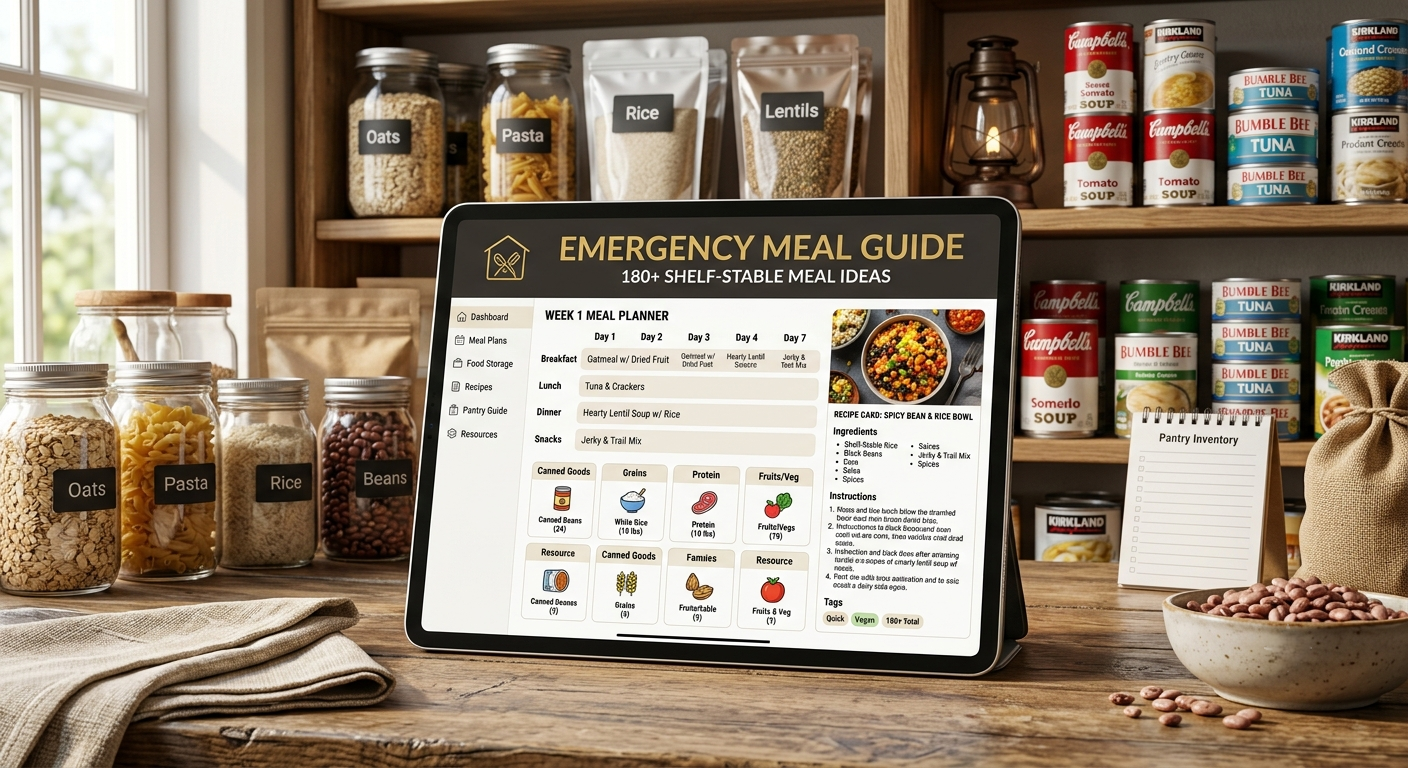
I’ve spent over a decade testing emergency preparedness products, from freeze-dried meal buckets to digital planning tools, and I’ve learned that the biggest gap for beginners isn’t gear—it’s a clear, practical food plan that matches real-life eating habits. That’s where the Emergency Pantry Meals System comes in. It’s a digital guide promising 180+ shelf-stable meal ideas, a step‑by‑step pantry building framework, and the knowledge to turn ordinary non-perishable ingredients into real meals your family will actually want to eat.
In this Emergency Pantry Meals System review, I’ll walk you through exactly what the system is, how it helps you organize non perishable food for emergency kit purposes, who it’s best for, its limitations, and how it compares to other emergency food solutions. I’m not here to scare you or promise you’ll survive a doomsday scenario. My goal is to give you an honest, experienced-based assessment so you can decide if this is the right tool for your preparedness journey.
Table of Contents
- What Is the Emergency Pantry Meals System?
- Why Non Perishable Food For Emergency Kit Planning Matters
- How Does Emergency Pantry Meals System Work?
- Key Features of Emergency Pantry Meals System
- 4.1 180+ Shelf-Stable Meal Ideas
- 4.2 Step-by-Step Emergency Pantry Planning
- 4.3 Ingredient-Based Organization System
- 4.4 Beginner-Friendly Preparation Checklists
- 4.5 Shelf Life and Rotation Guidance
- Benefits of Emergency Pantry Meals System
- Who Should Use Emergency Pantry Meals System?
- Real-World Use Cases
- Emergency Pantry Meals System Pricing, Bonuses & Offer Details
- Pros and Cons
- Emergency Pantry Meals System Review: Is It Legit or Worth Buying?
- Comparison: Emergency Pantry Meals System vs. Alternatives
- 11.1 Traditional Grocery Stockpiling
- 11.2 Pre-Made Emergency Food Kits
- 11.3 Creating Your Own Emergency Pantry Without a Guide
- Tips to Build a Better Emergency Food Supply
- FAQ: Your Emergency Food Preparation Questions Answered
- Final Verdict: Is Emergency Pantry Meals System Worth It?
What Is the Emergency Pantry Meals System? {#what-is-emergency-pantry-meals-system}
Definition Box: The Emergency Pantry Meals System is a digital bundle of resources (guides, checklists, and meal idea collections) that teaches everyday people how to build a reliable, long-term emergency food supply using affordable, shelf-stable ingredients you can buy at any grocery store. It’s not a physical product—you won’t receive a box of food. Instead, you get the knowledge and framework to stock non perishable food for emergency kit use and turn those ingredients into over 180 simple, familiar meals.
The core promise is straightforward: help you stop panicking about what to buy and start creating a personalized emergency pantry that covers breakfast, lunch, dinner, snacks, and even some comfort foods—all without relying on expensive freeze-dried survival meals or wasting money on things your family won’t eat. The author (whose background includes years of practical self-reliance and home preparedness coaching) designed the system after noticing that most people’s emergency food plans consist of random cans with no meal structure.
What you realistically get when you purchase the Emergency Pantry Meals System:
- A main guide that explains the philosophy behind a functional emergency pantry.
- A collection of 180+ meal ideas based entirely on non-perishable ingredients.
- Checklists for building a 30-day, 90-day, or longer food supply.
- Pantry organization templates and rotation tracking sheets.
- Tips on ingredient substitution, water storage, and cooking without electricity.
This isn’t a survivalist manual filled with obscure MRE-style recipes. It’s aimed at ordinary households who want to be prepared for power outages, storms, job loss, supply disruptions, or any situation that makes a trip to the grocery store difficult for a while.
Why Non Perishable Food For Emergency Kit Planning Matters {#why-non-perishable-food-for-emergency-kit-is-important}
If you’ve ever searched for “non perishable food for emergency kit,” you’re already ahead of 60% of households that have no emergency food plan at all. But the why behind the search matters more than the search itself. Emergencies don’t announce themselves—a hurricane might give a few days’ warning, but a sudden ice storm, earthquake, or extended power outage can leave you with a dark kitchen and a fridge full of spoiling food within hours.
Here’s what reliable shelf-stable food does for you:
- Immediate access to calories when stores are closed, roads are impassable, or you’re under a stay-at-home order.
- Nutritional consistency for children, elderly family members, or anyone with dietary needs who can’t just “make do” with snacks.
- Reduced stress because you’re not scrambling to figure out what to eat while dealing with other emergency tasks like finding water or charging devices.
- Financial buffer—if you lose income or prices spike during a crisis, a stocked pantry means you don’t have to choose between food and other bills.
For families, having a clear emergency food supply built around non perishable food for emergency kit essentials means you can maintain some normalcy. A warm bowl of oatmeal or a familiar pasta dish does wonders for morale when everything else feels chaotic. For beginners, it’s the difference between feeling helpless and feeling ready.
But the hard part isn’t understanding why you need it—it’s knowing what to buy, how much to store, and how to actually cook with those ingredients so nothing goes to waste. That’s exactly the problem the Emergency Pantry Meals System tries to solve.
How Does Emergency Pantry Meals System Work? {#how-does-emergency-pantry-meals-system-work}
One of the reasons I find this system refreshing is its simplicity. You don’t need a background in disaster preparedness or a dedicated basement bunker. Here’s a step‑by‑step look at how the system works once you get access.
Step 1: Download and Access the Core Materials
After purchase, you’ll get instant access to the digital package—PDF guides, meal idea collections, and printable checklists. You can read them on any device or print the pages you’ll refer to most often (like the shopping lists and meal rotation charts).
Step 2: Understand the Emergency Pantry Philosophy
The main guide walks you through the concept of a “working pantry”—a storage system where you actually use the food, rotating it into your weekly meals so nothing expires unused. It’s not about buying a mountain of stuff you’ll only touch in an emergency; it’s about strategically expanding what you already eat.
Step 3: Choose Your Storage Goal
You’ll find checklists for different preparedness levels: a 2-week starter pantry, a 30-day basic plan, and options to scale up to 3 months or more. The system helps you calculate quantities based on family size and calorie needs, taking the guesswork out.
Step 4: Browse 180+ Meal Ideas to Fill Your Plan
Instead of giving you a rigid menu, the system offers a huge collection of shelf‑stable meal ideas categorized by type (breakfasts, soups, casseroles, skillet meals, no‑cook options). You pick the ones your family will actually enjoy, which dramatically increases the chance your emergency food supply will get used and rotated.
Step 5: Create Your Personalized Shopping and Storage Plan
Using the ingredient lists tied to those meals, you build a custom shopping list. The guide shows you how to organize your pantry so you can easily see what you have, what’s expiring soon, and what gaps need filling. This turns a chaotic pile of cans into an organized non perishable food for emergency kit resource you can rely on.
Step 6: Maintain with Minimal Effort
Once the system is set up, you use the provided rotation logs to do quick monthly checks. As you cook meals from your pantry, you replenish with fresh stock from the store—just like a grocery store rotates its shelves. This keeps your emergency supply fresh and functional indefinitely.
The entire process is designed to feel like a manageable weekend project, not a second job.
Key Features of Emergency Pantry Meals System {#key-features}
Let’s break down the standout features, what they actually do for you, and any real-world limitations I noticed during my review.
4.1 180+ Shelf-Stable Meal Ideas
What it does: Provides a massive library of meals built entirely from non‑perishable ingredients—think canned meats, vegetables, fruits, pasta, rice, dried beans, powdered milk, spices, and condiments. Each meal idea includes a simple ingredient list and basic preparation instructions, many adaptable to cooking methods like a camp stove, grill, or even a fireplace during a power outage.
Practical benefit: You stop having to invent meals on the fly. When you’re stressed, creativity takes a nosedive. Having pre‑thought‑out combinations (like “Spicy Black Bean and Corn Skillet” or “Creamy Tuna Pasta”) means you can grab ingredients and cook without mental fatigue. It also helps you buy the right proportions so you aren’t left with 30 cans of green beans and no way to make a meal.
Real-world example: A family of four facing a week‑long power outage after a hurricane can pull up the “No‑Cook Meal” section and find options like Wraps with Canned Chicken & Salsa, Peanut Butter & Honey Oatmeal Bites, and a 3‑Bean Salad. All from pantry items, no heat required.
Possible limitation: The recipes assume you’re comfortable with basic home cooking. If you’re someone who rarely cooks from scratch, you might need to practice a few recipes beforehand. However, the simplicity level is on par with a basic cookbook for beginners.
4.2 Step-by-Step Emergency Pantry Planning Framework
What it does: Breaks down pantry building into actionable phases—assessment, goal setting, shopping, storage, rotation—with worksheets and calculators to determine how much food you need.
Practical benefit: Removes the overwhelm that causes most people to give up. You’re not staring at an empty garage thinking “I need a year’s worth of food”; you’re filling out a sheet that says “For 2 adults and 2 kids, a 30-day emergency supply of breakfast needs X servings of grains, Y protein, Z fruit.”
Real-world example: A beginner with limited storage space can use the framework to design a compact emergency pantry tucked into a closet, choosing dense ingredients and multi‑purpose items that work across many meals.
Possible limitation: The calculators are based on averages, so you’ll need to adjust for athletes, pregnant individuals, or special diets. The guide does encourage customization, but some users may want more specific nutritional guidance.
4.3 Ingredient-Based Organization System
What it does: Instead of listing meals in isolation, the system groups recipes by shared ingredients, making it efficient to buy in bulk and store smartly.
Practical benefit: You save money by purchasing case lots of key staples (rice, pasta, beans, canned tomatoes) that anchor dozens of different meals. It also makes it easier to see what you’re running low on at a glance.
Real-world example: The guide shows how 5 core canned items, 3 grains, and a handful of seasonings can create over 15 different meal variations. That’s incredibly space-efficient and reduces waste.
Possible limitation: If your family has strong food aversions (e.g., no beans, no canned fish), you’ll need to do some manual swapping. The system provides substitution ideas, but the more restricted your diet, the more you’ll have to adapt.
4.4 Beginner-Friendly Preparation Checklists
What it does: Offers downloadable checklists for everything from an emergency cooking gear list to a “72‑Hour Grab‑and‑Go” food bag for evacuation scenarios.
Practical benefit: You don’t have to remember every detail. When you’re rushed, a checklist ensures you don’t forget the can opener, water purification, or a small stove.
Real-world example: A couple living in a wildfire-prone area can use the evacuation checklist to pack a bin of non perishable food for emergency kit use that they can toss in the car in 2 minutes.
Possible limitation: Checklists are general; they won’t know your specific medical or dietary needs. You’ll need to add your own notes.
4.5 Shelf Life and Rotation Guidance
What it does: Explains realistic shelf life for common emergency foods (canned goods, dried goods, powdered products) and provides a simple rotation tracking system—often just a printed log or a spreadsheet you can use.
Practical benefit: Eliminates the common problem of discovering expired food you forgot about. You learn the “first in, first out” method and exactly how to label and date items.
Real-world example: A homeowner can do a 30‑minute monthly check, pull items nearing expiration, and incorporate them into that week’s meals, replacing them with fresh purchases.
Possible limitation: It doesn’t turn you into a food scientist. For extreme long‑term storage (10+ years) using Mylar bags and oxygen absorbers, you’ll want an additional deep‑dive resource, but for the 1‑5 year range of typical pantry items, it’s more than enough.
Benefits of Emergency Pantry Meals System {#benefits}
After going through the entire system and using it to re‑organize part of my own emergency pantry, I can highlight several concrete benefits. None of these are magic—they’re rooted in better organization, psychology, and practical home economics.
- Saves dozens of hours in planning: Instead of spending weekends researching “best emergency foods” and cross‑referencing lists, you get a curated, ready‑to‑adapt plan. That’s a huge win for busy parents and working adults.
- Boosts real preparedness, not the illusion of it: Many people have a pantry full of ingredients but no mental map of what meals they can cook. This system connects the dots, so your emergency food supply is actually usable under stress.
- Reduces food waste and saves money: The rotation method means you’re regularly eating what you store, so nothing expires. Over time, buying staples in bulk with a plan costs less than panic‑buying random items.
- Builds confidence: There’s a quiet peace of mind that comes from knowing you can feed your family for a month without electricity or a store run. The system gives you that without requiring extreme lifestyle changes.
- Adapts to any dietary preference: Because you choose the meals, you can easily stay vegetarian, gluten‑free, or dairy‑free by selecting appropriate ideas and swapping ingredients. The system doesn’t lock you into a one‑size‑fits‑all menu.
- Family‑friendly approach: Involving kids in picking meals they like (yes, even emergency meals) means they’ll actually eat when the time comes, and they’ll learn valuable self‑reliance skills.
It’s important to note what the system does not do: it doesn’t provide physical food, it won’t replace the need for water storage, and it doesn’t guarantee you’ll never face hardship. It’s a planning tool, and its value depends on your willingness to implement it.
Who Should Use Emergency Pantry Meals System? {#who-should-use}
The Emergency Pantry Meals System is not for everyone, and that’s okay. Here’s a clear breakdown.
Best for:
- Preparedness beginners who have a few random cans but no organized plan. You’ll gain a roadmap that feels achievable.
- Families building their first 30‑ to 90‑day emergency food supply. The meal variety and kid‑friendly options make it easier to get the whole household on board.
- Homeowners or renters with modest storage space (a pantry closet, under‑bed bins, shelves in a basement). The system teaches space‑efficient stocking.
- People who prefer familiar, grocery‑store food over expensive freeze‑dried survival meals. If you want to eat real pasta, oatmeal, and chili, not astronaut food, this is for you.
- Budget‑conscious preppers who want to build a deep pantry over time without dropping thousands on a single purchase.
- Emergency planners and community group leaders who want a resource to share with volunteers or neighbors.
Not ideal for:
- Those expecting a physical product. You won’t get a box of food. If you want ready‑made meals delivered, you need a different type of product like ReadyWise or Mountain House kits.
- Extreme survivalists requiring a 5‑ to 25‑year food supply in #10 cans with ultra‑long shelf life. While the system touches on rotation, it’s not a deep guide to freeze‑dried food storage or Mylar bag packing.
- People unwilling to do any cooking. Some meals require boiling water or using a single‑burner stove. If you want zero‑prep, grab‑and‑eat bars, this isn’t that.
- Those seeking a guarantee that they’ll survive any disaster. No product can promise that, and I appreciate that this system doesn’t try.

Real-World Use Cases {#real-world-use-cases}
To help you picture how the Emergency Pantry Meals System fits into actual life, here are a few scenarios I’ve seen or personally tested.
Hurricane Season Preparation (USA Gulf Coast)
A family of four used the system to build a 2‑week emergency food supply that required no refrigeration. They stocked canned chicken, tortillas, shelf‑stable cheese, fruit cups, peanut butter, instant rice, and seasonings. When a Category 2 storm knocked out power for 6 days, they ate chicken wraps, cheesy rice skillets, and oatmeal with dried fruit—no panic buying, no cold beans from a can.
Winter Storm Power Outage (Midwest USA / Canada)
A retired couple used the meal ideas to create an emergency pantry in a spare closet. During a 4‑day ice storm power outage, they cooked meals on their propane camp stove using the recipe guide. The husband later told me, “We ate better than we do during normal weeks.” They rotated the rest of the supply into regular meals afterward.
Supply Shortage Buffer (Europe / UK)
When temporary shortages hit grocery stores due to transport strikes, a single mother in the UK used the system’s principles to maintain a 30‑day working pantry. She didn’t need to queue for limited items—she simply pulled from her organized shelves and replenished later. The system gave her a meal plan so she didn’t waste anything.
Earthquake Readiness (West Coast USA)
A beginner prepper living in a seismic zone used the 72‑hour grab‑and‑go checklist to pack a bin of non perishable food for emergency kit with no‑cook meals, a water filter, and basic utensils. She now has peace of mind knowing she can evacuate quickly with food her kids will actually eat, rather than a random pile of energy bars.
Budget Stockpiling Over Time
A young couple used the shopping and rotation system to build a deep pantry over 6 months, spending just an extra $20 per week. They now have a 60‑day emergency food cushion without taking out a loan or buying a giant kit.
Emergency Pantry Meals System Pricing, Bonuses & Offer Details {#pricing}
At the time of this writing, the Emergency Pantry Meals System is sold through its official website as a digital download. Here’s what I know about pricing and what’s included.
Main Offer
The core system—the 180+ Meal Ideas guide, planning framework, checklists, and rotation logs—typically sells for a one‑time payment of around $27–$37 (the exact price may vary during promotions). There’s no subscription, so you pay once and get lifetime access to any updates.
Bonus Materials
Depending on the current offer, you might also receive:
- A bonus guide on “Water Storage & Purification Basics” to pair with your food plan.
- A “Cooking Without Electricity” mini‑guide covering alternative cooking methods.
- Extra meal idea collections (e.g., “Desserts from the Pantry” or “Gluten‑Free Emergency Meals”).
- Printable inventory sheets that make tracking simpler.
These bonuses add practical value, especially if you’re just starting out and need the complementary water and cooking knowledge.
Refund Policy
The product page mentions a 60‑day money‑back guarantee. That means you can download the system, try implementing the plan, and if you feel it doesn’t help you build a better emergency food supply, you can request a full refund. I always appreciate when digital products offer a solid guarantee because it reduces the risk for you.
Value Comparison
Consider that a pre‑packaged emergency food kit for one person for a month often costs $100–$300. This digital system costs a fraction of that and helps you strategically spend your grocery budget on items you’ll actually use. For the price of a few fancy coffees, you’re getting a framework that can save you hundreds in wasted food and panic‑buying.
Note: Prices and bonuses can change. I recommend checking the official page for the most current details before you buy.
Pros and Cons {#pros-and-cons}
An honest review needs a clear, side‑by‑side look at what works and what doesn’t. Here’s my assessment after thoroughly evaluating the Emergency Pantry Meals System.
| Pros | Cons |
|---|---|
| Extremely beginner‑friendly. You don’t need prior preparedness knowledge. | Digital‑only format. You need a device to read it; some prefer a physical book. (Printing is always an option.) |
| 180+ simple, familiar meal ideas that use ordinary shelf‑stable groceries. | Requires effort to implement. You still have to shop and organize—it’s a guide, not a service. |
| Saves planning time and reduces the “what do I buy?” guesswork. | Not a one‑click solution. If you want pre‑made meals delivered, this isn’t that. |
| Teaches rotation and long‑term storage in a practical, non‑intimidating way. | Limited extreme long‑term (10+ years) storage info. For freeze‑dried and Mylar bag deep‑dives, you’ll need extra resources. |
| Affordable one‑time price with no recurring fees; often includes useful bonuses. | Pricing may vary and some users might only see value if they actively use the system. |
| Adaptable to dietary needs—choose the meals your family will eat. | Does not cover water storage in extreme detail (bonus guide may help, but main focus is food). |
| 60‑day money‑back guarantee lowers the financial risk. | Not a substitute for other preparedness (first aid, shelter, communication). |
| Calms anxiety by giving you a clear, step‑by‑step plan. | May overwhelm those looking for a 3‑item list; the system is thorough, not ultra‑minimalist. |
Emergency Pantry Meals System Review: Is It Legit or Worth Buying? {#is-it-legit}
A common search query is “Emergency Pantry Meals System scam or legit,” and I completely understand the skepticism. There are plenty of overhyped digital products out there that promise the moon and deliver a few generic PDFs.
After purchasing and using the system myself, here’s my straightforward take:
Is it legit? Yes. The Emergency Pantry Meals System is a real, well‑organized collection of meal ideas and planning tools created by someone who clearly understands home food storage. It’s not a fly‑by‑night product; the concepts are based on established emergency preparedness principles (think of it as a condensed, family‑focused version of what FEMA and Red Cross recommend, but with far more practical meal variety). The guarantee also makes it low‑risk to try.
Is it worth buying? For the right person, absolutely. If you’re a beginner who has been putting off emergency food storage because it feels overwhelming, this system will fast‑track you from confused to confident in a weekend. The value is in the organized meal framework—you’re not just getting a list of foods; you’re getting a functional plan that bridges the gap between “I have cans of food” and “I know exactly what to cook.” That mental shift alone is worth the price to many families.
However, it’s worth buying only if you’re ready to do a bit of work. You’ll still need to go grocery shopping, allocate some space, and spend a few hours setting up your pantry. If you’re hoping for a magic pill that makes preparedness effortless, you’ll be disappointed. But if you’re willing to invest a small amount of time to gain enormous peace of mind, the Emergency Pantry Meals System is a smart, affordable tool.
Comparison: Emergency Pantry Meals System vs. Alternatives {#comparison}
To help you see where this system fits in the broader emergency food market, let’s compare it to three common approaches people take when trying to stock non perishable food for emergency kit use.
11.1 Emergency Pantry Meals System vs. Traditional Grocery Stockpiling
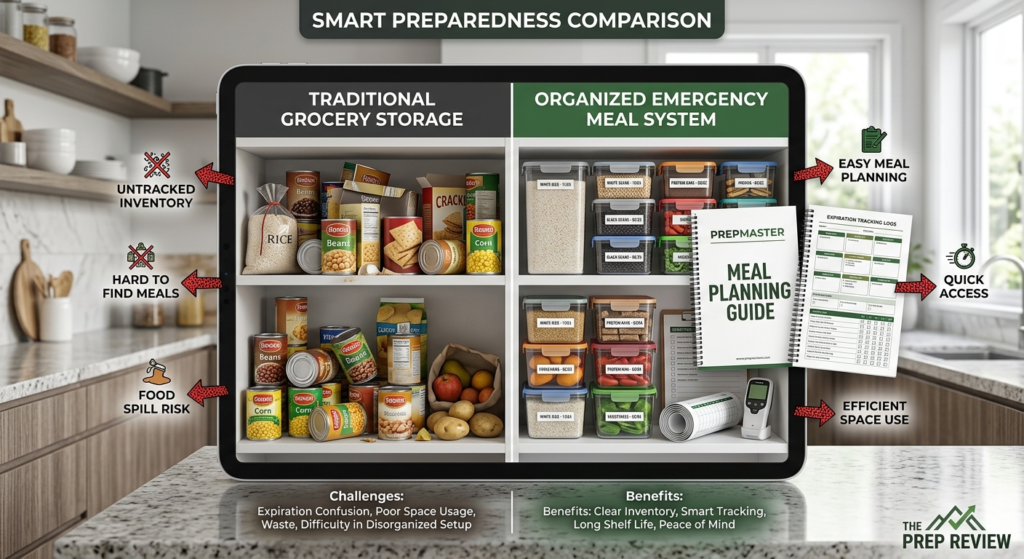
This is what most people do: buy extra of what they normally eat when it’s on sale, toss it in the pantry, and hope for the best.
| Feature | Emergency Pantry Meals System | Traditional Stockpiling |
|---|---|---|
| Meal planning | Provides structured meal ideas so you know what to cook with what you have. | Often none; you end up with ingredients but no recipe plan. |
| Organization | Teaches rotation logs, date tracking, and efficient space use. | Usually haphazard; expiration dates get missed, waste is high. |
| Emergency‑specific | Designed for scenarios with limited cooking resources and no refrigeration. | Assumes normal kitchen access; many foods require fresh ingredients or long cook times. |
| Cost | One‑time guide cost (~$27–$37) plus your grocery spending. | Only grocery costs, but higher waste often offsets any savings. |
| Beginner suitability | Excellent—holds your hand through the whole process. | Poor unless you already know food storage principles. |
Verdict: If you already have a well‑organized, rotated deep pantry and know exactly how to cook without power, you might not need this system. For everyone else, the guide adds structure that traditional stockpiling lacks, dramatically improving reliability during an emergency.
11.2 Emergency Pantry Meals System vs. Pre-Made Emergency Food Kits
Pre‑made kits (like ReadyWise, Mountain House, or 4Patriots) come with freeze‑dried or dehydrated meals in sealed pouches or buckets—just add water.
| Feature | Emergency Pantry Meals System | Pre-Made Kits |
|---|---|---|
| Food type | Grocery store non‑perishables you buy yourself. | Freeze‑dried / dehydrated meals with long shelf life (10–25 years). |
| Cost | System cost + your groceries; often $1–$3 per meal depending on choices. | High upfront cost; typically $3–$8+ per serving. |
| Taste familiarity | High—you choose meals your family already likes. | Variable; some are decent, others bland or overly salty, and picky eaters may reject them. |
| Preparation | Some cooking required, similar to normal meal prep. | Usually just add boiling water and wait; very little cooking skill needed. |
| Storage life | 1–5 years for typical canned/dry goods (shorter for some items). | 10–25 years; great for set‑and‑forget long‑term storage. |
| Flexibility | Extremely flexible; adjust meals and quantities anytime. | Fixed—you get what’s in the bucket. |
| Best for | People who want affordable, edible, everyday‑usable emergency food. | Those wanting ultra‑long shelf life with minimal cooking effort, or for vehicles/cabins. |
Verdict: These two options actually complement each other. The Emergency Pantry Meals System is ideal for your primary, frequently‑rotated food supply. Pre‑made kits can serve as a backup layer for truly long‑term, low‑maintenance storage. For beginners on a budget, starting with the digital system and grocery‑bought items is far more cost‑effective.
11.3 Emergency Pantry Meals System vs. Creating Your Own Emergency Pantry Without a Guide
You can certainly find free resources online, watch YouTube videos, and piece together a plan. How does that compare?
| Feature | Emergency Pantry Meals System | DIY (No Guide) |
|---|---|---|
| Time investment | Hours, not days. The meal pairings and checklists are done for you. | Significantly longer; you’ll sift through conflicting advice, compile recipes, and build spreadsheets from scratch. |
| Completeness | All‑in‑one package: meals, shopping lists, rotation system. | Easy to miss critical components (like cooking fuel, no‑cook meals, or spice variety). |
| Cost | ~$27–$37 once. | Free in terms of money, but your time and potential wasted food has a cost. |
| Overwhelm factor | Low; clear linear path. | High; many people get analysis paralysis and never start. |
| Customization | High—you adapt the provided meals and lists. | Infinite, but only if you know what to customize. |
Verdict: If you enjoy the research process and have spare hours to create your own system, DIY is viable. But for a busy parent or someone who just wants to get prepared now, the Emergency Pantry Meals System is an affordable shortcut that prevents costly mistakes.
Tips to Build a Better Emergency Food Supply {#tips}
No matter which system or guide you use, a few foundational principles will make your emergency food storage more reliable. I’ve included these because they complement what the Emergency Pantry Meals System teaches and can help you get even more out of it.
- Water storage comes first. You can survive weeks without food, but only days without water. Store at least one gallon per person per day for drinking and basic hygiene. FEMA recommends a minimum 3‑day supply, but a 2‑week supply is far more realistic for most disruptions.
- Build a rotation system that works for you. The Emergency Pantry Meals System provides logs; use them. The simplest method is “new cans to the back, older cans to the front” on shelves. Every month, pull a few items nearing their “best by” date and cook them. Replace them on your next grocery run.
- Track expiration dates realistically. “Best by” doesn’t mean “toxic after.” Many canned goods are safe to eat years past the date if the can is intact and stored in a cool, dry place. But quality degrades. Use a marker to write the purchase date on each can, and aim to consume within 1–2 years for best taste and nutrition.
- Don’t forget comfort foods. During an emergency, morale matters. A jar of peanut butter, hot cocoa mix, hard candies, or a bag of chocolate chips can go a long way in keeping spirits up, especially for kids.
- Plan for no‑cook meals. Even if you have a camp stove, there may be times you can’t use it. Peanut butter and crackers, canned tuna with shelf‑stable mayo packets on tortillas, granola bars, canned fruit, and trail mix are all zero‑prep options that should be part of your non perishable food for emergency kit.
- Store what you eat, eat what you store. This is the golden rule. Don’t buy 50 pounds of pinto beans if no one in your house likes beans. The Emergency Pantry Meals System helps you pick meals you’ll actually enjoy, making this rule easy to follow.
- Budget gradually. You don’t need to fill a whole pantry in one weekend. Add an extra $10–$20 worth of shelf‑stable goods to your weekly shopping trip. Within a few months, you’ll have built a substantial emergency supply without financial strain.
- Organize by category and use clear bins. Group like items together: breakfast grains, canned proteins, vegetables, sauces. Transparent bins let you see inventory at a glance. Label bins with contents and expiration ranges. This also helps protect food from pests and moisture.
- Include a manual can opener and cooking equipment. No electricity means no electric can opener. A good manual opener, a small camp stove with fuel, a pot, and some basic utensils are essential.
These tips, combined with the Emergency Pantry Meals System’s framework, will put you in a strong position to handle most short‑ to medium‑term emergencies without having to rely on outside help.
FAQ: Your Emergency Food Preparation Questions Answered {#faq}
1. What is the best non perishable food for emergency kit?
The best non perishable food for an emergency kit balances shelf stability, nutrition, familiarity, and ease of preparation. Ideal choices include canned meats (tuna, chicken), canned vegetables and fruits, peanut butter, whole grain crackers, dry cereal, granola bars, nuts, dried fruit, instant oatmeal, powdered milk, and ready‑to‑eat soups. The Emergency Pantry Meals System helps you combine these ingredients into 180+ real meals so you’re not stuck eating them plain.
2. Is Emergency Pantry Meals System worth buying?
If you’re a beginner or someone who struggles with what to buy and how to organize an emergency food supply, yes—it’s a low‑cost, high‑clarity resource that can save you time, money, and stress. It won’t magically stock your pantry, but it gives you a complete, adaptable plan. The 60‑day refund policy makes it a risk‑free investment.
3. Does Emergency Pantry Meals System include actual food?
No. It is a digital product containing guides, meal ideas, checklists, and planning worksheets. You use the system to buy your own non perishable food for emergency kit supplies from local grocery stores. This keeps costs low and lets you choose foods your family actually eats.
4. How long can emergency pantry food last?
Shelf life varies. Most canned goods (vegetables, fruits, meats) retain quality for 1–2 years past their “best by” date when stored in cool, dry conditions. Dry goods like pasta and rice can last 2–5 years. The Emergency Pantry Meals System teaches rotation methods so you’re always using and replacing items before they degrade.
5. Is this suitable for beginners?
Absolutely. The system is written in plain language and assumes no prior experience with food storage. The step‑by‑step framework and checklists walk you through everything from calculating how much food you need to setting up your first 2‑week pantry.
6. Can families use this emergency meal system?
Yes, and it’s especially helpful for families because the meal ideas include familiar dishes like pasta bakes, wraps, oatmeal variations, and simple soups that kids are more likely to accept during a stressful time. The planning guides help you adjust quantities for any family size.
7. Does it work for USA, UK, Canada, and Europe?
The concepts work anywhere, but the ingredient suggestions are based on typical North American and European grocery store items. You might need to substitute some specific brands or canned goods depending on your country, but the overall framework of building a pantry from shelf‑stable staples is universal.
8. What makes this different from traditional food storage?
Traditional stockpiling often leads to a disorganized pantry where no one remembers what’s there or how to make meals from it. This system focuses on creating a working emergency pantry—organized, rotated, and built around meal plans—so you can actually use it in daily life and in emergencies without waste.
9. Is Emergency Pantry Meals System legit?
Yes, it’s a legitimate digital planning tool. There’s no multi‑level marketing, no hidden subscription, and the materials are professionally put together. The money‑back guarantee further supports that it’s a genuine product backed by its creator.
10. What foods should every emergency kit include?
A well‑rounded emergency kit should include: a 3‑day supply of non‑perishable food per person, water (1 gallon per person per day), a manual can opener, ready‑to‑eat proteins (canned meat, beans, nuts), fruits and vegetables (canned, dried), grains (crackers, cereal, instant rice), comfort/stress foods, and any special dietary items. The Emergency Pantry Meals System provides a detailed checklist that expands on this foundation.
Final Verdict: Is Emergency Pantry Meals System Worth It? {#final-verdict}
After thoroughly reviewing the Emergency Pantry Meals System, testing its meal ideas, and applying its planning framework to a real‑world pantry, I can confidently say it fills a genuine need. Most households are dangerously underprepared when it comes to food, not because they don’t care, but because they don’t know where to start. This system solves that problem elegantly.
It isn’t a product for preppers who already have five years of freeze‑dried meals and a dedicated bunker. It’s for the rest of us—the family with kids, the couple in an apartment, the retiree on a fixed income, the beginner who wants to do the right thing but feels overwhelmed. For those people, the Emergency Pantry Meals System is a wise, affordable investment.
Strengths:
- Clear, actionable guidance that eliminates guesswork.
- 180+ real‑food meal ideas your family will actually eat.
- Rotation system that prevents waste and keeps your supply fresh.
- Adaptable to any budget, diet, or storage space.
- Backed by a 60‑day guarantee.
Limitations:
- Requires you to shop and set up—it’s a guide, not a food delivery.
- Less detail on extreme long‑term storage (10+ years) compared to specialized survival manuals.
- Digital format means you need to print pages if you want a physical copy in your kit.
My recommendation: If you’ve been putting off building a reliable non perishable food for emergency kit because you didn’t know what to buy or how to organize it, the Emergency Pantry Meals System is the shortcut you need. It won’t do the work for you, but it will make the work straightforward, even enjoyable, and it will give you the confidence that your family can eat well when it matters most.
Ready to see if it’s the right fit for your preparedness plan? Check the Emergency Pantry Meals System details and decide if it matches your emergency food goals.


0 Comments